Employee experience
People describe how work and safety really happen.
The UGRs® Stock Take
Policies and systems describe how safety should work. The UGRs Stock Take uncovers the unwritten rules that shape how work is really done—especially when speaking up, stopping or reporting is inconvenient.
Discuss a Stock TakeHow the Stock Take works
People describe how work and safety really happen.
Shared perceptions and unwritten rules become visible.
Signals, patterns and strengths are brought together.
Steve or Stef helps leaders test the interpretation.
Leaders agree what to protect, challenge and do next.
A proven standard framework provides benchmark perspective. Carefully chosen additional lead-ins can explore an organisation’s own cultural priorities.
What leaders can begin to see
The Stock Take brings employee meaning alongside the numbers, helping leaders examine cultural conditions rather than relying on a score alone.
Where people challenge unsafe behaviour—and where they hold back.
What gets reported, what does not, and why.
How pressure shows up and what it drives.
What helps honest learning—and what gets in the way.
How leadership choices are experienced on the ground.
How different groups experience the same working environment.
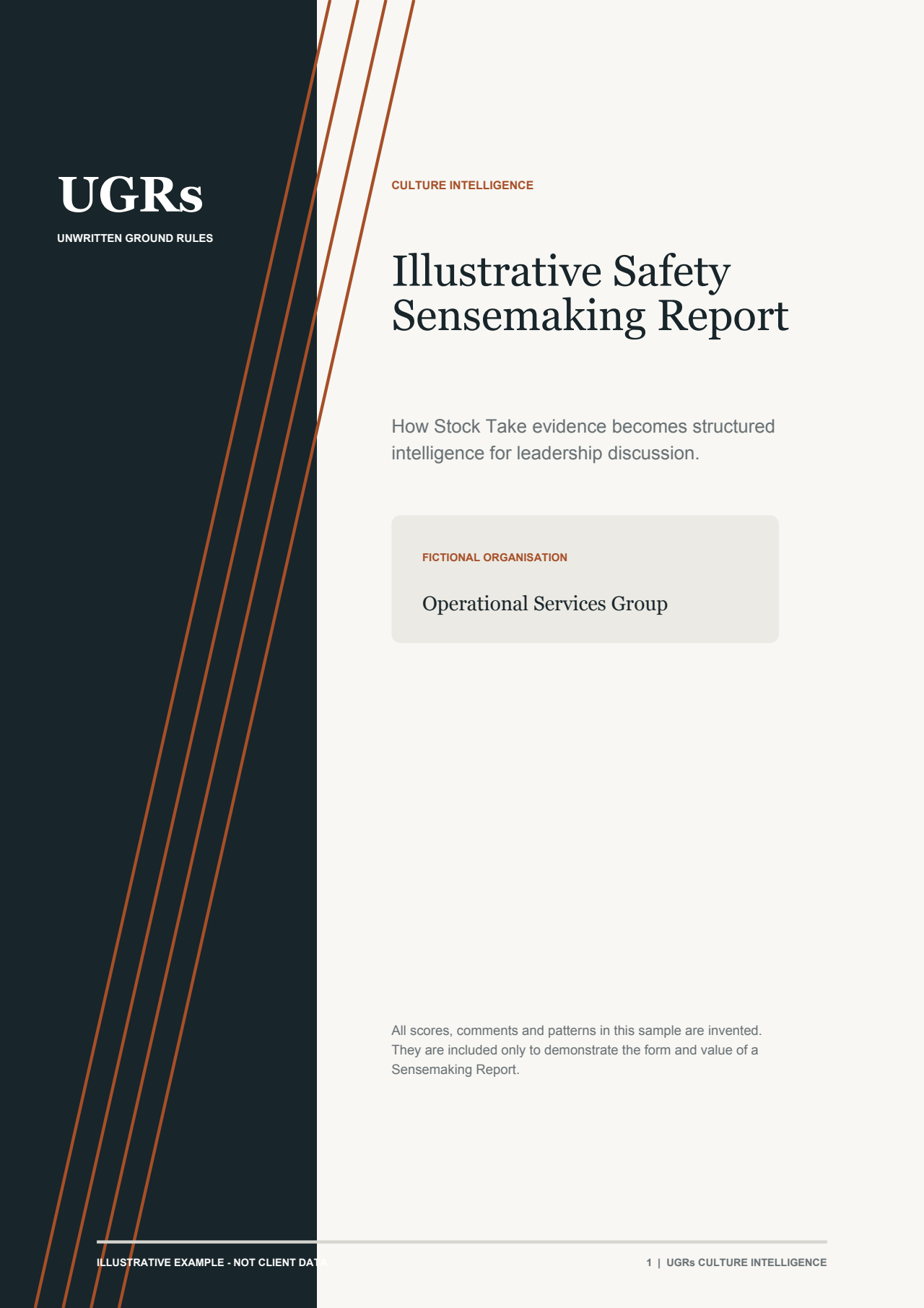
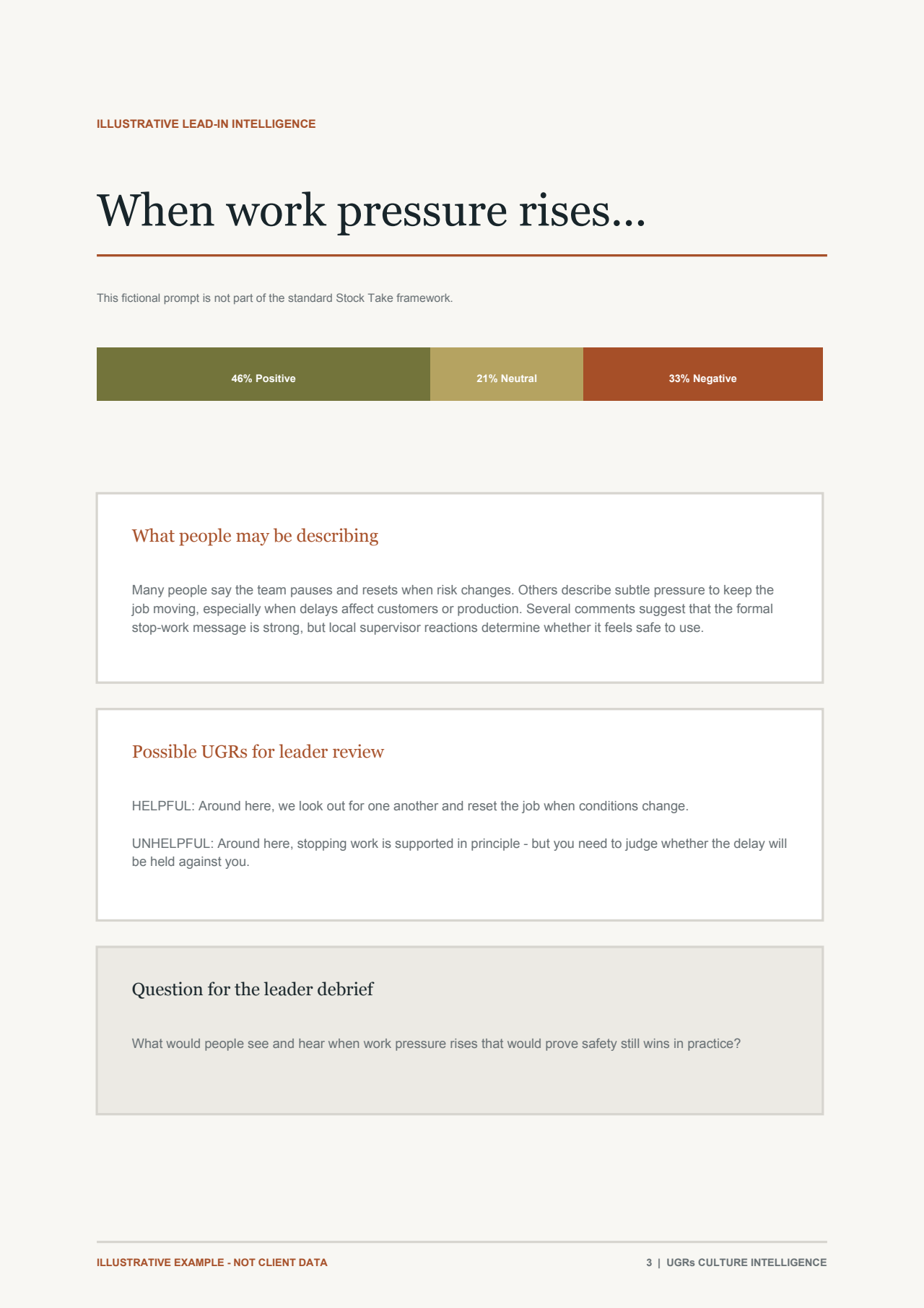
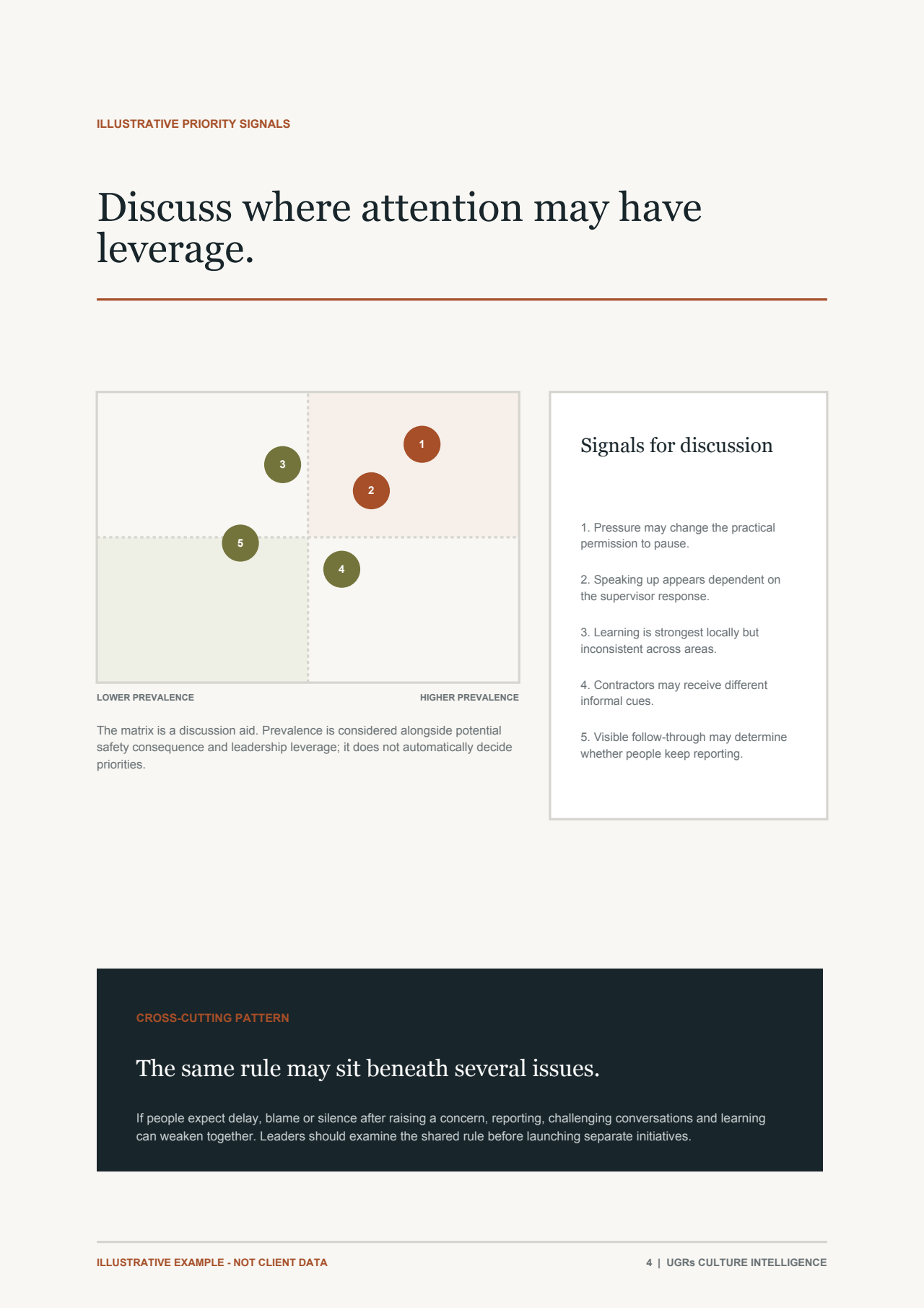
Culture Intelligence Sensemaking Report
The report brings together scores, recurring employee language, cultural strengths, priority signals and inferred UGRs. It provides a disciplined basis for leadership discussion—not an automated verdict.
The leader debrief
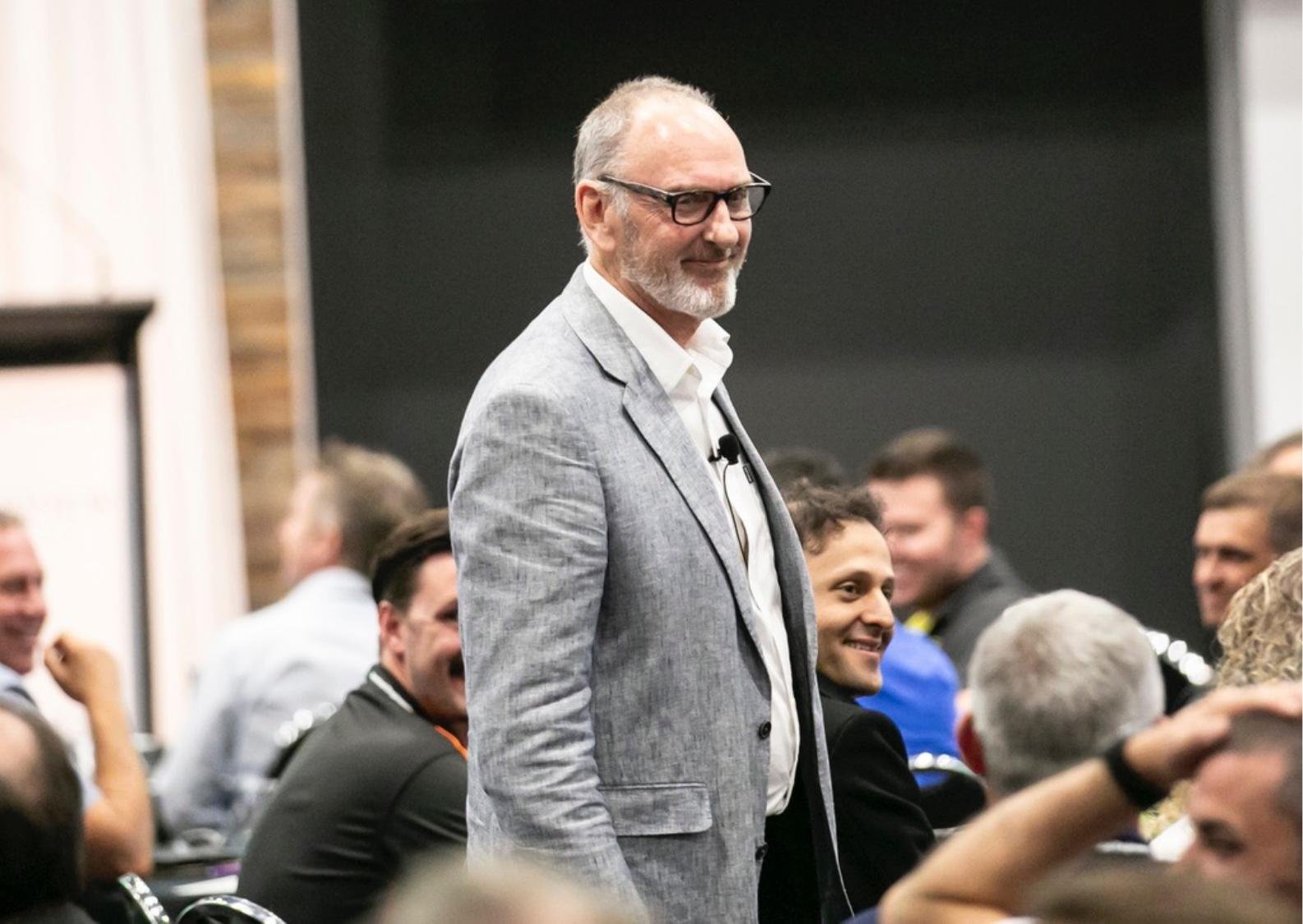
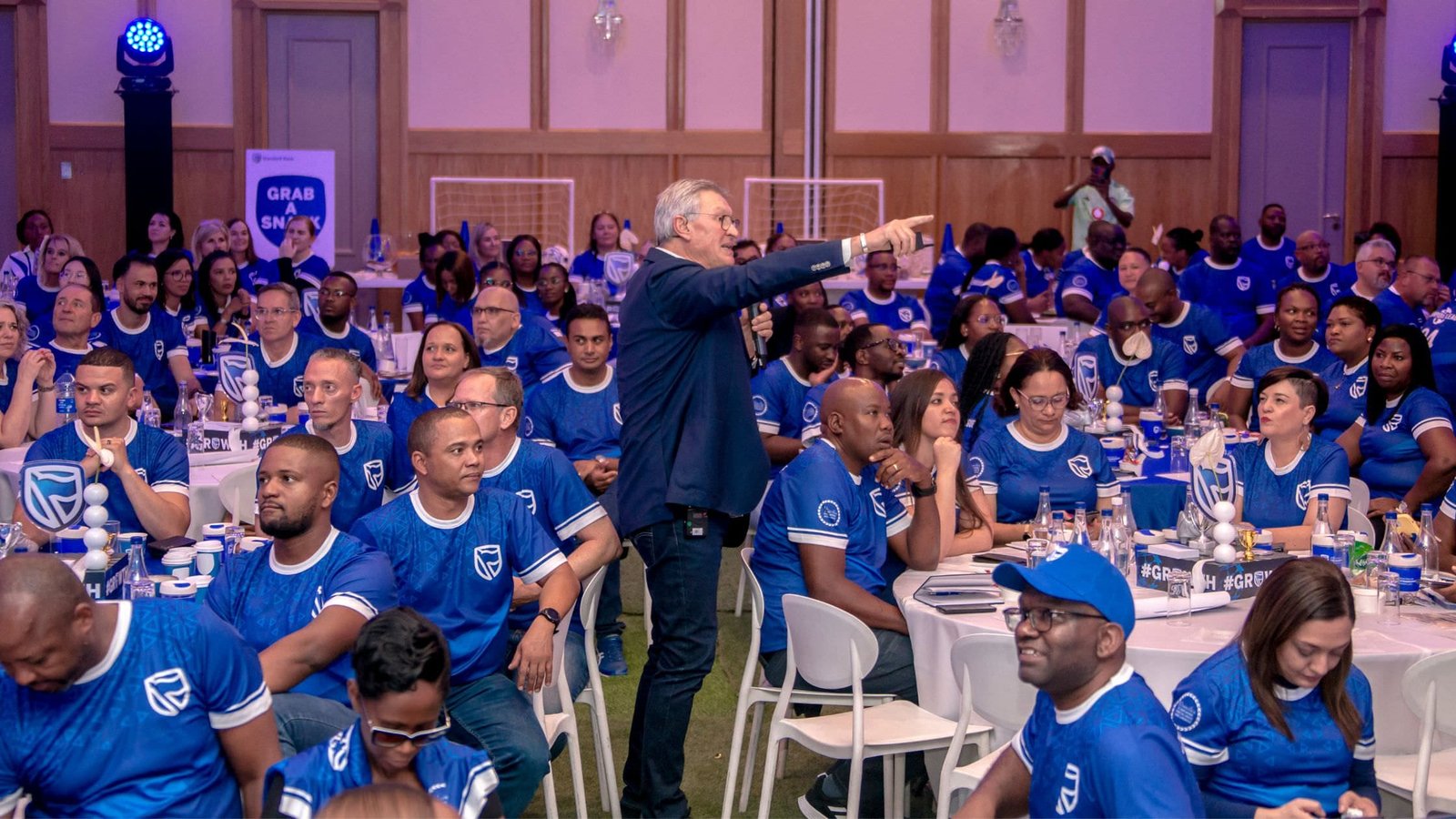
Steve or Stef works directly with leaders to test the meaning, challenge assumptions and decide what happens next—what to protect, what to challenge and where leadership attention will have most leverage.
Designed for consequential environments
The Safety UGRs Stock Take is particularly relevant for executives, safety leaders and operational leaders in complex, distributed or high-risk workplaces.
It is designed to support better questions and better decisions—not to replace existing safety systems, investigations or professional safety expertise.
A confidential first conversation
Discuss what a Safety UGRs Stock Take could reveal in your organisation.
Talk with Steve or StefInformation submitted through this website is used only to provide requested resources and respond to enquiries about UGRs, workplace safety culture and the UGRs Stock Take. Information submitted through the contact form is used only to respond to the enquiry and is not presented as an organisational diagnosis. Information is not sold or used for unrelated marketing. This website does not currently use advertising or tracking cookies. You may request access to, correction of or deletion of your contact details by emailing steve@ugrs.net.